http://www.pitt.edu/~dash/folktexts.html
Wednesday, April 2, 2014

Thought waves between brains
A few days ago I was astonished. Dear friend Sumi started reading a lot or thinking a lot about the things that I am reading and thinking. I - have been attending classes and reading books.. and she, without all this - has become a Buddha. This prompted me to think - can thoughts spread?
Sometimes I have realized this with my husband or Nidhi also. We're thinking of the same things.
It can't be just coincidence always.
And this thing with Sumi - made me feel different. Coz all of a sudden she is thinking all this andI was wondering if thoughts can be transmitted from one brain to another unconsciously. I strangely seem to have subscribed to this theory.
Thoughts... connecting humans..cosmic intelligence..wow..
Napoloeon Hill:
"I have proved, times too numerous to enumerate, to my own satisfaction at least, that every human brain is both a broadcasting and a receiving station for vibrations of thought frequency."
http://www.hrzone.com/blogs/charismanikki/charismatic-leadership-times-austerity/big-apple-experiment-and-infinite-intelli
http://www.shalinibosbyshell.com/thoughts.htm
http://www.in5d.com/napoleon-hill-the-secret-and-much-more.html
Some thoughts on thoughts
"Can it be said… that there are not many [frequencies] of [electromagnetic] vibrations that may give us results as wonderful as or even more wonderful than, the wireless [radio] waves? It seems to me that in [a range of frequencies] lie the vibrations which we have assumed to be given off by our brains and nerve cells when we think… … If the thought waves are similar to the wireless [radio] waves, they must pass from the brain and flow endlessly around the world and the universe. The body and the skull and other solid obstacles would form no obstruction to their passage…
"You ask if there would not be constant interference and confusion if other people's thoughts were flowing through our brains and setting up thoughts in them that did not originate with ourselves?
"How do you know that other men's thoughts are not interfering with yours now? I have noticed a good many phenomena of mind disturbances that I have never been able to explain. For instance, there is the inspiration or discouragement that a speaker feels in addressing an audience. I have experienced this many times in my life and I have never been able to define exactly the physical causes of it.
"Many recent scientific discoveries, in my opinion, point to a day not far distant perhaps, when men will read one another's thoughts, when thoughts will be conveyed directly from brain to brain without intervention of speech, writing, or any of the present known methods of communication.
"It is not unreasonable to look forward to a time when we shall see without eyes, hear without ears, and talk without tongues.
"Briefly, the hypothesis that mind can communicate directly with mind rests on the theory that thought, or vital force, is a form of electrical disturbance, that it can be taken up by induction and transmitted to a distance either through a wire or simply through the all-pervading ether, as in the case of wireless telegraph waves."
from: The Law of Success in Sixteen Lessons, Volume I—see book list below
Ramamurti S. Mishra, MD
In The Textbook of Yoga Psychology Dr. Mishra writes about telepathy and clairvoyance being by-products of Yoga meditation practice:
"…Most theories of the west are built on non-admission of telepathy and clairvoyance. Yoga admits not only that such phenomena are possible but that they have been confirmed by experience of yogins in meditation. The system of Yoga admits individual mind and says that it is a manifestation of Cosmic Mind. Hence in purity of individual mind, there must be ability to communicate with all minds of the universe. Telepathy, clairvoyance, etc., are not the aim of Yoga practice. They are by-products of this practice… This purity is achieved only through meditation and contemplation practice according to the classical system of Yoga.
"Each mind purified through [meditation] becomes able to connect with other minds without losing its identity…
"…This state of mind is the same as that of the Self-realization method taught by yogins. The system of Yoga has evolved a technique to produce the telepathic state of mind, which operates like radio or television at that particular moment."
Dr. Mishra reiterates that these psychic phenomena are the by-products, and not the aim of Yoga practice, and notes that practitioners are warned to use such abilities only for purposes which further the realization of Cosmic Unity and the true Self.
from: Textbook of Yoga Psychology—see book list below
Napoleon Hill
"I have proved, times too numerous to enumerate, to my own satisfaction at least, that every brain is both a broadcasting and a receiving station for vibrations of thought frequency…
"Every mind, or brain, is directly connected with every other brain by means of the ether. Every thought released by any brain may be instantly picked up and interpreted by all other brains that are 'en rapport' with the sending brain… …It is the belief of this author that every thought vibration released by any brain is picked up… and kept in motion in circuitous waves corresponding in length to the intensity of their release; that these vibrations remain in motion forever; that they are one of the two sources from which thoughts that 'pop' into one's mind emanate, the other source being direct and immediate contact… with the brain releasing the thought vibration."
from: The Law of Success in Sixteen Lessons, Volume I—see book list below
Jeremy Narby
In his book, The Cosmic Serpent, which explores the knowledge and visions of shamanic traditions, Jeremy Narby discusses the possible source of the images within the so-called "hallucinations" experienced by shamans. He proposes the intriguing idea that, in addition to the known fact that DNA, when stimulated in a particular way, emits photons (electromagnetic radiation), DNA can also absorb photons - just as quartz crystals can receive and emit electromagnetic waves.
"What if DNA, stimulated by nicotine and dimethyltryptamine (active substances in hallucinogenic plants) activates not only its emission of photons (which inundate our conciousness in the form of hallucinations), but also its capacity to pick up the photons emitted by the global network of DNA-based life? This would mean that the biosphere itself, which can be considered 'as a more or less fully interlinked unit' is the source of the images."
from: Cosmic Serpent—see book list below
Thomas Paine
"Any person, who has made observations on the state of progress of the human mind, by observing his own, cannot but have observed that there are two distinct classes of what are called Thoughts: those that we produce in ourselves by reflection and the act of thinking, and those that bolt into the mind of their own accord. I have made it a rule to treat these voluntary visitors with civility, taking care to examine, as well as I was able, if they were worth entertaining; and it is from them that I have acquired almost all the knowledge that I have."
from: The Law of Success in Sixteen Lessons, Volume I—see book list below
Kyra Mesich
In her book, The Sensitive Person's Survival Guide, Kyra Mesich describes her ideas regarding communication:
"There are two basic modes of communication in which humans could be fluent. They are the language of intellect and the language of emotion. They are separate because they function differently. Intellect is a projective language. We use it to send out ideas. Intellectual communication occurs when a person intends to send a message. Years of learning are required during our childhood in order to master the sophisticated intellectual language we use today.
"Emotional language is based in empathy. Empathy is a receptive language that is sensed internally. We receive others' emotional communication, whether they intend to send it or not. We are born with a natural ability for empathic communication. Emotional communication is not superior to our prevalent intellectual language and vice versa. These two methods of communication are different and serve different purposes. They are both needed in human society."
from: The Sensitive Person's Survival Guide—see book list below
Erwin Schrödinger
Physicist Erwin Schrödinger is the author of "Schrödinger's Wave Equation," one of the most beautiful and useful descriptions of quantum mechanics, for which he won the 1933 Nobel Prize for Physics.
In addition to his elegant descriptions of the physical world, Schrödinger also wrote quite eloquently about his own mystical worldview and of his study of Vedanta, the non-dualist philosophical literature of India.
In his essay, The Oneness of Mind, he writes of the apparent "lunacy" of the contrived Western concept of a multiplicity of conscious monads, existing in the world with no inter-connection between them, only able to agree on their view of the world by way of a sort of "pre-established harmony." He counters this absurd paradigm,
"…There is obviously only one alternative, namely the unification of minds or consciousnesses. Their multiplicity is only apparent, in truth, there is only one mind…"
He goes on to quote thirteenth-century Islamic-Persian mystic, Aziz Nasafi,
"On the death of any living creature, the spirit returns to the spiritual world, the body to the bodily world. In this, however, only the bodies are subject to change. The spiritual world is one single spirit who stands like unto a light behind the bodily world and who, when any single creature comes into being, shines through it as through a window. According to the kind and size of the window, less or more light enters the world. The light itself, however, remains unchanged."
Schrödinger continues,
"…consciousness is never experienced in the plural, only in the singular. Not only has none of us ever experienced more than one consciousness, but there is also no trace of circumstantial evidence of this ever happening anywhere in the world. If I say that there cannot be more than one consciousness in the same mind, this seems a blunt tautology - we are quite unable to imagine the contrary…"
In another essay, The I That Is God, he elaborates,
"In itself, the insight is not new. The earliest records, to my knowledge, date back some 2500 years or more… the recognition ATMAN=BRAHMAN (the personal self equals the omnipresent, all-comprehending eternal self) was in Indian thought considered, far from being blasphemous, to represent the quintessence of deepest insight into the happenings of the world. The striving of all the scholars of Vedanta was after having learnt to pronounce with their lips, really assimilate in their minds this grandest of all thoughts.
"Again, the mystics of many centuries, independently, yet in perfect harmony with each other (somewhat like the particles in an ideal gas) have described, each of them, the unique experience of his or her life in terms that can be condensed in the phrase: DEUS FACTUS SUM (I have become God).
"To Western ideology, the thought has remained a stranger… in spite of those true lovers who, as they look into each other's eyes, become aware that their thought and their joy are numerically one, not merely similar or identical…"
And in the powerful and expressive essay, The Mystic Vision, Schrödinger shows us his own true mysticism,
"…the plurality that we perceive is only an appearance; it is not real. Vedantic philosophy… has sought to clarify it by a number of analogies, one of the most attractive being the many-faceted crystal which, while showing hundreds of little pictures of what is in reality a single existent object, does not really multiply that object…
"…this knowledge, feeling, and choice are essentially eternal and unchangeable and numerically one in all men, nay in all sensitive beings. But not in this sense - that you are a part, a piece, of an eternal, infinite being, an aspect or modification of it… For we should then have the same baffling question: which part, which aspect are you? what, objectively, differentiates it from the others? No, but, inconceiveable as it seems to ordinary reason, you—and all other conscious beings as such—are all in all. Hence, this life of yours… is, in a certain sense, the whole… This, as we know, is what the Brahmins express in that sacred, mystic formula… 'Tat tvam asi' - this is you. Or, again, in such words as 'I am in the east and in the west, I am below and above, I am this whole world.'
"Thus you can throw yourself flat on the ground, stretched out upon Mother Earth, with certain conviction that you are one with her and she with you … For eternally and always there is only now, one and the same now; the present is the only thing that has no end."
from: Quantum Questions—see book list below
Laura Day
Explaining in her book, Practical Intuition, [Chapter 8 — You Already Know Everything] that we all have access to information about the world through our intuition, Laura Day writes,
"Intuition is a capacity you're born with as a human being, like the capacity for language or thinking or appreciating music. Intuition is not a power one acquires. It's an integral part of every human mental, emotional, and psychical process.
"Each moment—right now—you receive information intuitively; you're simply unaware of the process. You use your intuition in all those practical reasoned decisions you make every day, from choices as mundane as what to eat for dinner to what to major in or who to marry.
"The trick to using your intuition more effectively is to bring the unconscious data it supplies to a place where your conscious mind can interpret it. It takes work and guidance to put this unconscious process under control. I'll show you how to do that. In a sense, this book is about developing awareness of an ability you already have and use."
from: Practical Intuition—see book list below
the editors of Mind at Large
"In this 21st century, we should not have to argue about the reality of psychic abilities. The five chapters of this book devoted to remote viewing experiments show that most people have the ability to describe and experience events and locations that are blocked from ordinary perception. This perceptual ability has now been demonstrated and documented at Stanford Reaserch Institute, Princeton University, and numerous other U.S. and international laboratories. In spite of all this documentation for the existence of our natural capacity for such psychic abilities, they have not by any means been accepted as real by mainstream science. How can this be?
"The data are in. But, the debate about the existence of psychic abilities continues only among the uninformed."
from: Mind at Large—IEEE Symposia on the Nature of Extrasensory Perception—see book list below
References—quotes are found in the books listed below
(books available at major retailers unless otherwise noted)


Cosmic Serpent: DNA and the Origins of Knowledge
by Jeremy Narby
quote found on page 131
 The
Law of Success in Sixteen Lessons, Volume I
by Napoleon Hill
Alexander Graham Bell is quoted on pages 43-46
Napoleon Hill quote found on pages 47-50
Thomas Paine is quoted on pages 47-49
 Mind
at Large—Institue of Electrical and
Electronics Engineers Symposia on
the Nature of Extrasensory Perception
edited by Charles T. Tart, Harold E Puthoff, Russell Targ
quote found on flap
 Practical
Intuition
by Laura Day
quote found on page 46
 Quantum
Questions:
Mystical Writings of the World’s Great Physicists
edited by Ken Wilbur
Erwin Schrödinger quotes found on pages 85, 92, 95-97
 The
Sensitive Person's Survival Guide:
An Alternative Health Answer to Emotional
Sensitivity & Depression
by Kyra Mesich
quote found on page page 34
 Textbook
of Yoga Psychology
by Ramamurti S. Mishra, MD
available at ashramstore.com
quote found on pages 103-104
Sometimes I have realized this with my husband or Nidhi also. We're thinking of the same things.
It can't be just coincidence always.
And this thing with Sumi - made me feel different. Coz all of a sudden she is thinking all this andI was wondering if thoughts can be transmitted from one brain to another unconsciously. I strangely seem to have subscribed to this theory.
Thoughts... connecting humans..cosmic intelligence..wow..
Napoloeon Hill:
"I have proved, times too numerous to enumerate, to my own satisfaction at least, that every human brain is both a broadcasting and a receiving station for vibrations of thought frequency."
http://www.hrzone.com/blogs/charismanikki/charismatic-leadership-times-austerity/big-apple-experiment-and-infinite-intelli
http://www.shalinibosbyshell.com/thoughts.htm
http://www.in5d.com/napoleon-hill-the-secret-and-much-more.html
Some thoughts on thoughts
a few interesting ideas on the nature of the mind and our connection with one another from people with a wealth of experience in a wide variety of fields...Alexander Graham Bell
"Can it be said… that there are not many [frequencies] of [electromagnetic] vibrations that may give us results as wonderful as or even more wonderful than, the wireless [radio] waves? It seems to me that in [a range of frequencies] lie the vibrations which we have assumed to be given off by our brains and nerve cells when we think… … If the thought waves are similar to the wireless [radio] waves, they must pass from the brain and flow endlessly around the world and the universe. The body and the skull and other solid obstacles would form no obstruction to their passage…
"You ask if there would not be constant interference and confusion if other people's thoughts were flowing through our brains and setting up thoughts in them that did not originate with ourselves?
"How do you know that other men's thoughts are not interfering with yours now? I have noticed a good many phenomena of mind disturbances that I have never been able to explain. For instance, there is the inspiration or discouragement that a speaker feels in addressing an audience. I have experienced this many times in my life and I have never been able to define exactly the physical causes of it.
"Many recent scientific discoveries, in my opinion, point to a day not far distant perhaps, when men will read one another's thoughts, when thoughts will be conveyed directly from brain to brain without intervention of speech, writing, or any of the present known methods of communication.
"It is not unreasonable to look forward to a time when we shall see without eyes, hear without ears, and talk without tongues.
"Briefly, the hypothesis that mind can communicate directly with mind rests on the theory that thought, or vital force, is a form of electrical disturbance, that it can be taken up by induction and transmitted to a distance either through a wire or simply through the all-pervading ether, as in the case of wireless telegraph waves."
from: The Law of Success in Sixteen Lessons, Volume I—see book list below
Ramamurti S. Mishra, MD
In The Textbook of Yoga Psychology Dr. Mishra writes about telepathy and clairvoyance being by-products of Yoga meditation practice:
"…Most theories of the west are built on non-admission of telepathy and clairvoyance. Yoga admits not only that such phenomena are possible but that they have been confirmed by experience of yogins in meditation. The system of Yoga admits individual mind and says that it is a manifestation of Cosmic Mind. Hence in purity of individual mind, there must be ability to communicate with all minds of the universe. Telepathy, clairvoyance, etc., are not the aim of Yoga practice. They are by-products of this practice… This purity is achieved only through meditation and contemplation practice according to the classical system of Yoga.
"Each mind purified through [meditation] becomes able to connect with other minds without losing its identity…
"…This state of mind is the same as that of the Self-realization method taught by yogins. The system of Yoga has evolved a technique to produce the telepathic state of mind, which operates like radio or television at that particular moment."
Dr. Mishra reiterates that these psychic phenomena are the by-products, and not the aim of Yoga practice, and notes that practitioners are warned to use such abilities only for purposes which further the realization of Cosmic Unity and the true Self.
from: Textbook of Yoga Psychology—see book list below
Napoleon Hill
"I have proved, times too numerous to enumerate, to my own satisfaction at least, that every brain is both a broadcasting and a receiving station for vibrations of thought frequency…
"Every mind, or brain, is directly connected with every other brain by means of the ether. Every thought released by any brain may be instantly picked up and interpreted by all other brains that are 'en rapport' with the sending brain… …It is the belief of this author that every thought vibration released by any brain is picked up… and kept in motion in circuitous waves corresponding in length to the intensity of their release; that these vibrations remain in motion forever; that they are one of the two sources from which thoughts that 'pop' into one's mind emanate, the other source being direct and immediate contact… with the brain releasing the thought vibration."
from: The Law of Success in Sixteen Lessons, Volume I—see book list below
Jeremy Narby
In his book, The Cosmic Serpent, which explores the knowledge and visions of shamanic traditions, Jeremy Narby discusses the possible source of the images within the so-called "hallucinations" experienced by shamans. He proposes the intriguing idea that, in addition to the known fact that DNA, when stimulated in a particular way, emits photons (electromagnetic radiation), DNA can also absorb photons - just as quartz crystals can receive and emit electromagnetic waves.
"What if DNA, stimulated by nicotine and dimethyltryptamine (active substances in hallucinogenic plants) activates not only its emission of photons (which inundate our conciousness in the form of hallucinations), but also its capacity to pick up the photons emitted by the global network of DNA-based life? This would mean that the biosphere itself, which can be considered 'as a more or less fully interlinked unit' is the source of the images."
from: Cosmic Serpent—see book list below
Thomas Paine
"Any person, who has made observations on the state of progress of the human mind, by observing his own, cannot but have observed that there are two distinct classes of what are called Thoughts: those that we produce in ourselves by reflection and the act of thinking, and those that bolt into the mind of their own accord. I have made it a rule to treat these voluntary visitors with civility, taking care to examine, as well as I was able, if they were worth entertaining; and it is from them that I have acquired almost all the knowledge that I have."
from: The Law of Success in Sixteen Lessons, Volume I—see book list below
Kyra Mesich
In her book, The Sensitive Person's Survival Guide, Kyra Mesich describes her ideas regarding communication:
"There are two basic modes of communication in which humans could be fluent. They are the language of intellect and the language of emotion. They are separate because they function differently. Intellect is a projective language. We use it to send out ideas. Intellectual communication occurs when a person intends to send a message. Years of learning are required during our childhood in order to master the sophisticated intellectual language we use today.
"Emotional language is based in empathy. Empathy is a receptive language that is sensed internally. We receive others' emotional communication, whether they intend to send it or not. We are born with a natural ability for empathic communication. Emotional communication is not superior to our prevalent intellectual language and vice versa. These two methods of communication are different and serve different purposes. They are both needed in human society."
from: The Sensitive Person's Survival Guide—see book list below
Erwin Schrödinger
Physicist Erwin Schrödinger is the author of "Schrödinger's Wave Equation," one of the most beautiful and useful descriptions of quantum mechanics, for which he won the 1933 Nobel Prize for Physics.
In addition to his elegant descriptions of the physical world, Schrödinger also wrote quite eloquently about his own mystical worldview and of his study of Vedanta, the non-dualist philosophical literature of India.
In his essay, The Oneness of Mind, he writes of the apparent "lunacy" of the contrived Western concept of a multiplicity of conscious monads, existing in the world with no inter-connection between them, only able to agree on their view of the world by way of a sort of "pre-established harmony." He counters this absurd paradigm,
"…There is obviously only one alternative, namely the unification of minds or consciousnesses. Their multiplicity is only apparent, in truth, there is only one mind…"
He goes on to quote thirteenth-century Islamic-Persian mystic, Aziz Nasafi,
"On the death of any living creature, the spirit returns to the spiritual world, the body to the bodily world. In this, however, only the bodies are subject to change. The spiritual world is one single spirit who stands like unto a light behind the bodily world and who, when any single creature comes into being, shines through it as through a window. According to the kind and size of the window, less or more light enters the world. The light itself, however, remains unchanged."
Schrödinger continues,
"…consciousness is never experienced in the plural, only in the singular. Not only has none of us ever experienced more than one consciousness, but there is also no trace of circumstantial evidence of this ever happening anywhere in the world. If I say that there cannot be more than one consciousness in the same mind, this seems a blunt tautology - we are quite unable to imagine the contrary…"
In another essay, The I That Is God, he elaborates,
"In itself, the insight is not new. The earliest records, to my knowledge, date back some 2500 years or more… the recognition ATMAN=BRAHMAN (the personal self equals the omnipresent, all-comprehending eternal self) was in Indian thought considered, far from being blasphemous, to represent the quintessence of deepest insight into the happenings of the world. The striving of all the scholars of Vedanta was after having learnt to pronounce with their lips, really assimilate in their minds this grandest of all thoughts.
"Again, the mystics of many centuries, independently, yet in perfect harmony with each other (somewhat like the particles in an ideal gas) have described, each of them, the unique experience of his or her life in terms that can be condensed in the phrase: DEUS FACTUS SUM (I have become God).
"To Western ideology, the thought has remained a stranger… in spite of those true lovers who, as they look into each other's eyes, become aware that their thought and their joy are numerically one, not merely similar or identical…"
And in the powerful and expressive essay, The Mystic Vision, Schrödinger shows us his own true mysticism,
"…the plurality that we perceive is only an appearance; it is not real. Vedantic philosophy… has sought to clarify it by a number of analogies, one of the most attractive being the many-faceted crystal which, while showing hundreds of little pictures of what is in reality a single existent object, does not really multiply that object…
"…this knowledge, feeling, and choice are essentially eternal and unchangeable and numerically one in all men, nay in all sensitive beings. But not in this sense - that you are a part, a piece, of an eternal, infinite being, an aspect or modification of it… For we should then have the same baffling question: which part, which aspect are you? what, objectively, differentiates it from the others? No, but, inconceiveable as it seems to ordinary reason, you—and all other conscious beings as such—are all in all. Hence, this life of yours… is, in a certain sense, the whole… This, as we know, is what the Brahmins express in that sacred, mystic formula… 'Tat tvam asi' - this is you. Or, again, in such words as 'I am in the east and in the west, I am below and above, I am this whole world.'
"Thus you can throw yourself flat on the ground, stretched out upon Mother Earth, with certain conviction that you are one with her and she with you … For eternally and always there is only now, one and the same now; the present is the only thing that has no end."
from: Quantum Questions—see book list below
Laura Day
Explaining in her book, Practical Intuition, [Chapter 8 — You Already Know Everything] that we all have access to information about the world through our intuition, Laura Day writes,
"Intuition is a capacity you're born with as a human being, like the capacity for language or thinking or appreciating music. Intuition is not a power one acquires. It's an integral part of every human mental, emotional, and psychical process.
"Each moment—right now—you receive information intuitively; you're simply unaware of the process. You use your intuition in all those practical reasoned decisions you make every day, from choices as mundane as what to eat for dinner to what to major in or who to marry.
"The trick to using your intuition more effectively is to bring the unconscious data it supplies to a place where your conscious mind can interpret it. It takes work and guidance to put this unconscious process under control. I'll show you how to do that. In a sense, this book is about developing awareness of an ability you already have and use."
from: Practical Intuition—see book list below
the editors of Mind at Large
"In this 21st century, we should not have to argue about the reality of psychic abilities. The five chapters of this book devoted to remote viewing experiments show that most people have the ability to describe and experience events and locations that are blocked from ordinary perception. This perceptual ability has now been demonstrated and documented at Stanford Reaserch Institute, Princeton University, and numerous other U.S. and international laboratories. In spite of all this documentation for the existence of our natural capacity for such psychic abilities, they have not by any means been accepted as real by mainstream science. How can this be?
"The data are in. But, the debate about the existence of psychic abilities continues only among the uninformed."
from: Mind at Large—IEEE Symposia on the Nature of Extrasensory Perception—see book list below
References—quotes are found in the books listed below
(books available at major retailers unless otherwise noted)
Cosmic Serpent: DNA and the Origins of Knowledge
by Jeremy Narby
quote found on page 131
The
Law of Success in Sixteen Lessons, Volume Iby Napoleon Hill
Alexander Graham Bell is quoted on pages 43-46
Napoleon Hill quote found on pages 47-50
Thomas Paine is quoted on pages 47-49
Mind
at Large—Institue of Electrical and Electronics Engineers Symposia on
the Nature of Extrasensory Perception
edited by Charles T. Tart, Harold E Puthoff, Russell Targ
quote found on flap
Practical
Intuitionby Laura Day
quote found on page 46
Quantum
Questions:Mystical Writings of the World’s Great Physicists
edited by Ken Wilbur
Erwin Schrödinger quotes found on pages 85, 92, 95-97
The
Sensitive Person's Survival Guide: An Alternative Health Answer to Emotional
Sensitivity & Depression
by Kyra Mesich
quote found on page page 34
Textbook
of Yoga Psychologyby Ramamurti S. Mishra, MD
available at ashramstore.com
quote found on pages 103-104
Monday, March 31, 2014
Meenakshi Ammal of Samaithu paar fame and other brave women.
Yday I wanted to read about this lady. Someone had mentioned her in their food blog and I was interested to know more about this Tamil cook book author.
What I read, on the website amazed me. This is a woman, a young widow with no educational qualifications, who wrote the famous and first of its kind tamil cook book!
Look at the list of items covered in her cookery book list and you'd be amazed...
Hats off to this lady!
I could not help but remember by own grandmother and her struggles as a young widow - a woman with no property, no education and absolutely no financial security or income... how she raised her three young kids...and how they are all well settled beyond her own belief is stuff of rags to riches story..
Also, another interesting widow with a beautiful window to life:
Post by Mohamed Imthiyas.
Thrive by Arianna Huffington
http://www.amazon.com/Thrive-Redefining-Success-Creating-Well-Being/dp/0804140847/ref=sr_1_1?ie=UTF8&qid=1396324653&sr=8-1&keywords=thrive
http://thrivebook.megaph.com/live.html
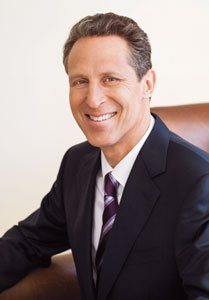
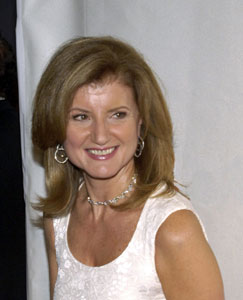 Arianna Huffington and Mark Hyman discuss Arianna's new book Thrive: The Third Metric to Redefining Success and Creating a Life of Well-Being, Wisdom, and Wonder.
Arianna Huffington is the chair, president, and editor-in-chief of the Huffington Post Media Group, a nationally syndicated columnist, and author of fourteen books. Mark Hyman, MD is a seven-time New York Times bestselling author—Including the recently released Blood Sugar Solution 10-Day Detox Diet—founder and medical director of The UltraWellness Center in Lenox, Massachusetts and Chairman of The Institute for Functional Medicine.
Mark Hyman: Arianna, in Thrive you talk about our need to redefine success beyond money and power to include what success means to us and that to live a truly successful life we need to integrate well-being, wisdom, wonder, and giving into our lives. You open the book describing your collapse in 2007 from exhaustion leading to a broken cheekbone and a round of visits to doctors and hospitals for tests. You were clearly running on empty, as I know so many people are—tell us about that experience and how it led to your larger wake-up call in terms of health and well-being.
Arianna Huffington: I had my personal wake-up call on April 6, 2007, when I found myself on the floor in a pool of blood. I had collapsed from exhaustion, breaking my cheekbone and cutting my eye. I was working eighteen-hour days to build The Huffington Post, while being a mom to my two teenage daughters. What this wake-up call taught me was that even though I was considered successful by our society's conventional measures of success, I was not living a successful life by any sane definition of success. Something had to radically change in my life.
As I've learned firsthand, overwork, stress, and sleep deprivation have profound effects on virtually every part of our lives. Our current model of success is not working for anyone. It’s not working for women, and really, it's not working for men either.
Mark Hyman: All so true. Stress really does impact your physical well-being, which is why I loved your discussion of the power of meditation in our lives to relieve stress and bring balance. You make the point that even a brief meditative moment can have a restorative effect. Tell us more about that and your daily practice.
Arianna Huffington: There is more and more scientific evidence about the impact of mindfulness and meditation in our lives. The list of all the conditions that these practices impact for the better—depression, anxiety, heart disease, memory, aging, creativity—sounds like a label on snake oil from the 19th century! Except this cure-all is real, and there are no toxic side effects. Indeed, 2013 was the year when meditation and mindfulness finally and overwhelmingly stopped being seen as something vaguely flaky, vaguely New Age-y, definitely California, and fully entered the mainstream.
I personally start every morning with at least 20 to 30 minutes of meditation. If you're just beginning, you can start by introducing 5 minutes of meditation into your day. Even just a few minutes will open the door to creating a new habit—and all the many proven benefits it brings.
Mark Hyman: Throughout the book you caution against the dangers of living in a permanently connected state. I agree that it is a growing problem in society today. I know over Christmas you participated in a digital detox yourself. Is it truly possible to disconnect, even when you are running the biggest online news site in the world?
Arianna Huffington: I'm happy to say that yes, it is possible! I spent the week between Christmas and New Year’s in Hawaii with my daughters, my sister, and my ex-husband—with no TV and no social media. Almost immediately, I was floored by the realization of just how much my phones had become almost physical extensions of myself—I would instinctively reach for them like phantom limbs! Unplugging meant rediscovering and savoring the moment for its own sake. Which is to say, taking in a view without tweeting it. Eating a meal without Instagramming it. Hearing my daughters say something hilarious and very shareable without sharing it. The unplugged version of myself was better able to give these things my full attention. And when I came back to the office, I was truly refreshed.
Mark Hyman: All important points. What do you want to see readers take away from this book?
Arianna Huffington: In the book, I pull together three threads: my personal journey and my hard-earned lessons; scientific studies about the importance of slowing down, sleep, meditation, and disconnecting from our devices; and many daily practices, tools, and techniques that can begin to transform our lives.
I very much hope that the book will chart another way forward—a way available to all of us right now, wherever we find ourselves. A way based on the timeless truth that life is shaped from the inside out—a truth that has been celebrated by spiritual teachers, poets, and philosophers throughout the ages, and has now been validated by modern science.
So I very much hope that the book will help make room in our definition of success for well-being, wisdom, wonder, and giving, and help us move from knowing what we need to do to actually doing it.
======================================================================
Greg: What was the genesis for the book Thrive?
Arianna: We founded The Huffington Post in 2005, and two years in we were growing at an incredible pace. I was on the cover of magazines and had been chosen by Time as one of the world’s 100 Most Influential People. But after my fall, I had to ask myself, "Was this what success looked like? Was this the life I wanted?" I was working eighteen hours a day, seven days a week, trying to build a business, expand our coverage, and bring in investors. But my life, I realized, was out of control. In terms of the traditional measures of success, which focus on money and power, I was very successful. But I was not living a successful life by any sane definition of success. I knew something had to radically change. I could not go on that way. And that is how Thrive came to be.
Greg: How did we get here? As a society I mean: what are the greater forces at play?
Arianna: Over time our society’s notion of success has been reduced to money and power. In fact, at this point, success, money, and power have practically become synonymous in the minds of many. This idea of success can work— or at least appear to work— in the short term. But over the long term, money and power by themselves are like a two-legged stool— you can balance on them for a while, but eventually you’re going to topple over. And more and more people— very successful people— are toppling over.
In the world of business, one of the primary obstacles keeping many companies from adopting more sane and sustainable metrics of success is the stubborn — and dangerously wrongheaded— myth that there is a trade- off between high performance at work and taking care of ourselves. This couldn’t be less true. And soon, the companies that still believe this will be in the minority. Right now, about 35 percent of large and midsize U.S. employers offer some sort of stress-reduction program, including Target, Apple, Nike, and Procter & Gamble. And those that do are starting to be recognized for their efforts, especially by employees. Glassdoor.com, the social jobs and careers community, releases an annual list of the top twenty- five companies for work- life balance: “Companies that make sincere efforts to recognize employees’ lives outside of the office,” said Glassdoor’s Rusty Rueff, “will often see the payoff when it comes to recruiting and retaining top talent.”
Greg: What is the most interesting research you came across in writing this book? Something which made you say, "Wow!"
Arianna: One point that really struck me had to do with gazelles. They run and flee when there is a danger— a leopard or a lion approaching— but as soon as the danger passes, they stop and go back to grazing peacefully without a care in the world. But human beings cannot distinguish between real dangers and imagined ones. As Mark Williams, a psychology professor at Oxford, explains, “The brain’s alarm signals start to be triggered not only by the current scare, but by past threats and future worries…So when we humans bring to mind other threats and losses, as well as the current scenario, our bodies’ fight-or-flight systems do not switch off when the danger is past. Unlike the gazelles, we don’t stop running.” Now my screensaver is a picture of gazelles – they are my role models! But Thrive explores many of the ways modern science is validating ancient wisdom, so there were a lot of “wow” moments!
Greg: What are 3 things people can do (or deliberately not do) to make the shift to thriving?
Arianna: Thrive is designed as a bridge,to help us move from knowing what to do to actually doing it. Here are three simple steps each of us can take that can have dramatic effects on our well-being:
1. Unless you are one of the wise few who already gets all the rest you need, you have an opportunity to immediately improve your health, creativity, productivity, and sense of well- being. Start by getting just thirty minutes more sleep than you are getting now. The easiest way is to go to bed earlier, but you could also take a short nap during the day— or a combination of both.
2. Introduce five minutes of meditation into your day. Eventually, you can build up to fifteen or twenty minutes a day (or more), but even just a few minutes will open the door to creating a new habit— and all the many proven benefits it brings.
3. At the end of each day, let go of something that you no longer need— something that is draining your energy without benefiting you or anyone you love. It could be resentments, negative self-talk, or a project you know you are not really going to complete.
Greg: Big question here and a bit of a shift, what do you want your eulogy to say?
Arianna: What I know for sure is that our eulogies have nothing to do with our resumes. Even for those who die with amazing Wikipedia entries, whose lives were synonymous with accomplishment and achievement, their eulogies focus mostly on what they did when they weren’t achieving and succeeding. They aren’t bound by our current, broken definition of success. Have you ever heard anyone eulogized by saying, "George was amazing. He increased market share by one-third!"?
http://thrivebook.megaph.com/live.html
Author One-on-One: Arianna Huffington and Mark Hyman
Arianna Huffington is the chair, president, and editor-in-chief of the Huffington Post Media Group, a nationally syndicated columnist, and author of fourteen books. Mark Hyman, MD is a seven-time New York Times bestselling author—Including the recently released Blood Sugar Solution 10-Day Detox Diet—founder and medical director of The UltraWellness Center in Lenox, Massachusetts and Chairman of The Institute for Functional Medicine.
Mark Hyman: Arianna, in Thrive you talk about our need to redefine success beyond money and power to include what success means to us and that to live a truly successful life we need to integrate well-being, wisdom, wonder, and giving into our lives. You open the book describing your collapse in 2007 from exhaustion leading to a broken cheekbone and a round of visits to doctors and hospitals for tests. You were clearly running on empty, as I know so many people are—tell us about that experience and how it led to your larger wake-up call in terms of health and well-being.
Arianna Huffington: I had my personal wake-up call on April 6, 2007, when I found myself on the floor in a pool of blood. I had collapsed from exhaustion, breaking my cheekbone and cutting my eye. I was working eighteen-hour days to build The Huffington Post, while being a mom to my two teenage daughters. What this wake-up call taught me was that even though I was considered successful by our society's conventional measures of success, I was not living a successful life by any sane definition of success. Something had to radically change in my life.
As I've learned firsthand, overwork, stress, and sleep deprivation have profound effects on virtually every part of our lives. Our current model of success is not working for anyone. It’s not working for women, and really, it's not working for men either.
Mark Hyman: All so true. Stress really does impact your physical well-being, which is why I loved your discussion of the power of meditation in our lives to relieve stress and bring balance. You make the point that even a brief meditative moment can have a restorative effect. Tell us more about that and your daily practice.
Arianna Huffington: There is more and more scientific evidence about the impact of mindfulness and meditation in our lives. The list of all the conditions that these practices impact for the better—depression, anxiety, heart disease, memory, aging, creativity—sounds like a label on snake oil from the 19th century! Except this cure-all is real, and there are no toxic side effects. Indeed, 2013 was the year when meditation and mindfulness finally and overwhelmingly stopped being seen as something vaguely flaky, vaguely New Age-y, definitely California, and fully entered the mainstream.
I personally start every morning with at least 20 to 30 minutes of meditation. If you're just beginning, you can start by introducing 5 minutes of meditation into your day. Even just a few minutes will open the door to creating a new habit—and all the many proven benefits it brings.
Mark Hyman: Throughout the book you caution against the dangers of living in a permanently connected state. I agree that it is a growing problem in society today. I know over Christmas you participated in a digital detox yourself. Is it truly possible to disconnect, even when you are running the biggest online news site in the world?
Arianna Huffington: I'm happy to say that yes, it is possible! I spent the week between Christmas and New Year’s in Hawaii with my daughters, my sister, and my ex-husband—with no TV and no social media. Almost immediately, I was floored by the realization of just how much my phones had become almost physical extensions of myself—I would instinctively reach for them like phantom limbs! Unplugging meant rediscovering and savoring the moment for its own sake. Which is to say, taking in a view without tweeting it. Eating a meal without Instagramming it. Hearing my daughters say something hilarious and very shareable without sharing it. The unplugged version of myself was better able to give these things my full attention. And when I came back to the office, I was truly refreshed.
Mark Hyman: All important points. What do you want to see readers take away from this book?
Arianna Huffington: In the book, I pull together three threads: my personal journey and my hard-earned lessons; scientific studies about the importance of slowing down, sleep, meditation, and disconnecting from our devices; and many daily practices, tools, and techniques that can begin to transform our lives.
I very much hope that the book will chart another way forward—a way available to all of us right now, wherever we find ourselves. A way based on the timeless truth that life is shaped from the inside out—a truth that has been celebrated by spiritual teachers, poets, and philosophers throughout the ages, and has now been validated by modern science.
So I very much hope that the book will help make room in our definition of success for well-being, wisdom, wonder, and giving, and help us move from knowing what we need to do to actually doing it.
======================================================================
Greg: What was the genesis for the book Thrive?
Arianna: We founded The Huffington Post in 2005, and two years in we were growing at an incredible pace. I was on the cover of magazines and had been chosen by Time as one of the world’s 100 Most Influential People. But after my fall, I had to ask myself, "Was this what success looked like? Was this the life I wanted?" I was working eighteen hours a day, seven days a week, trying to build a business, expand our coverage, and bring in investors. But my life, I realized, was out of control. In terms of the traditional measures of success, which focus on money and power, I was very successful. But I was not living a successful life by any sane definition of success. I knew something had to radically change. I could not go on that way. And that is how Thrive came to be.
Greg: How did we get here? As a society I mean: what are the greater forces at play?
Arianna: Over time our society’s notion of success has been reduced to money and power. In fact, at this point, success, money, and power have practically become synonymous in the minds of many. This idea of success can work— or at least appear to work— in the short term. But over the long term, money and power by themselves are like a two-legged stool— you can balance on them for a while, but eventually you’re going to topple over. And more and more people— very successful people— are toppling over.
In the world of business, one of the primary obstacles keeping many companies from adopting more sane and sustainable metrics of success is the stubborn — and dangerously wrongheaded— myth that there is a trade- off between high performance at work and taking care of ourselves. This couldn’t be less true. And soon, the companies that still believe this will be in the minority. Right now, about 35 percent of large and midsize U.S. employers offer some sort of stress-reduction program, including Target, Apple, Nike, and Procter & Gamble. And those that do are starting to be recognized for their efforts, especially by employees. Glassdoor.com, the social jobs and careers community, releases an annual list of the top twenty- five companies for work- life balance: “Companies that make sincere efforts to recognize employees’ lives outside of the office,” said Glassdoor’s Rusty Rueff, “will often see the payoff when it comes to recruiting and retaining top talent.”
Greg: What is the most interesting research you came across in writing this book? Something which made you say, "Wow!"
Arianna: One point that really struck me had to do with gazelles. They run and flee when there is a danger— a leopard or a lion approaching— but as soon as the danger passes, they stop and go back to grazing peacefully without a care in the world. But human beings cannot distinguish between real dangers and imagined ones. As Mark Williams, a psychology professor at Oxford, explains, “The brain’s alarm signals start to be triggered not only by the current scare, but by past threats and future worries…So when we humans bring to mind other threats and losses, as well as the current scenario, our bodies’ fight-or-flight systems do not switch off when the danger is past. Unlike the gazelles, we don’t stop running.” Now my screensaver is a picture of gazelles – they are my role models! But Thrive explores many of the ways modern science is validating ancient wisdom, so there were a lot of “wow” moments!
Greg: What are 3 things people can do (or deliberately not do) to make the shift to thriving?
Arianna: Thrive is designed as a bridge,to help us move from knowing what to do to actually doing it. Here are three simple steps each of us can take that can have dramatic effects on our well-being:
1. Unless you are one of the wise few who already gets all the rest you need, you have an opportunity to immediately improve your health, creativity, productivity, and sense of well- being. Start by getting just thirty minutes more sleep than you are getting now. The easiest way is to go to bed earlier, but you could also take a short nap during the day— or a combination of both.
2. Introduce five minutes of meditation into your day. Eventually, you can build up to fifteen or twenty minutes a day (or more), but even just a few minutes will open the door to creating a new habit— and all the many proven benefits it brings.
3. At the end of each day, let go of something that you no longer need— something that is draining your energy without benefiting you or anyone you love. It could be resentments, negative self-talk, or a project you know you are not really going to complete.
Greg: Big question here and a bit of a shift, what do you want your eulogy to say?
Arianna: What I know for sure is that our eulogies have nothing to do with our resumes. Even for those who die with amazing Wikipedia entries, whose lives were synonymous with accomplishment and achievement, their eulogies focus mostly on what they did when they weren’t achieving and succeeding. They aren’t bound by our current, broken definition of success. Have you ever heard anyone eulogized by saying, "George was amazing. He increased market share by one-third!"?
Thursday, March 27, 2014
The McDonaldization of Society
Boss: Make these people busy.. do whatever... just keep them busy.
Employee: How busy?
Boss: Totally busy and drained. Get them hooked to games and FB and other toys and work.
Employee (confused): OK.....
Boss: Also, remember to pay them. Make them feel rewarded.
Employee (even more confused): Then?
Boss: Make him eat more, game more, sleep more, spend more, work more, buy more and make him think he's enjoying life.
Employee: Boss.. just tell me what you want to sell to that poor guy.
Boss: Smart guy. We own McD, Coke, Weight Watchers, AOL, FB, anti depressants and Viagra.
Inspired by The McDonaldization of Society.
Sunday, March 23, 2014
Miracles
All of us wait 5..10 or 20 years for miracles to happen.
What exactly is a miracle? Is it some huge success? A huge bank balance?
A big degree or fancy corporate title?
We need to understand what kind of miracle we want. What is it that we're waiting for.. to make us happy and blissful?
http://blog.ishafoundation.org/lifestyle/real-life-true-miracle-greatest-stories/
http://blog.ishafoundation.org/sadhguru/spot/the-magic-of-life/
Washington Post's social experiment
http://www.washingtonpost.com/wp-dyn/content/article/2007/04/04/AR2007040401721.html
Also read:
http://en.wikipedia.org/wiki/Qatsi_trilogy
Also read:
http://en.wikipedia.org/wiki/Qatsi_trilogy
Subscribe to:
Posts (Atom)